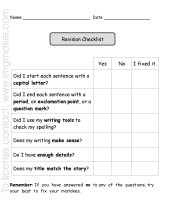
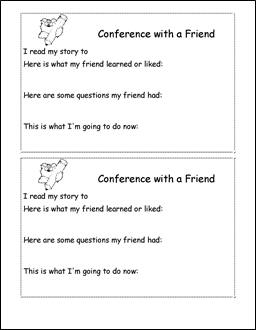
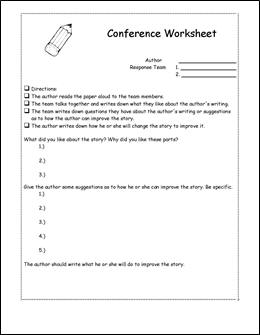
The Writers at Work Collection contains stationery and posters, math journal story problem cards, writer’s tools, materials for primary writers workshop, and suggestions for writing and publishing in a primary classroom. This set also includes reproducible picture dictionaries to support emergent or struggling writers as well as a high frequency word practice book. Colorful shape books support the final step in the writing process: publishing!
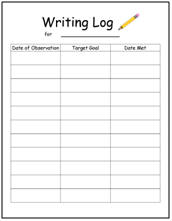
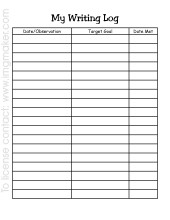
Keep track of the words your students use in their writing. When you get an initial writing sample from the Observation Survey, write all correctly spelled words on this chart. Keep this record handy when thinking about your lesson plans.
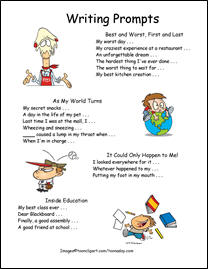
These writing posters are meant to support beginning writers. I have posted these in pdf format, but if you’d like them in a Word Document, just let me know at carl1404@msn.com. That way you can eliminate, add, or change the vocabulary for your particular class. I would suggest reproducing them on card stock and laminating them for durability. If you have other writing topics that you’d like to include here, please let me know at the above email address.
Fill in this chart on a weekly basis, adding new words that your emergent writers record correctly in their journals. The chart shows change and growth over time. It’s a good one to show parents and use for planning your lessons.
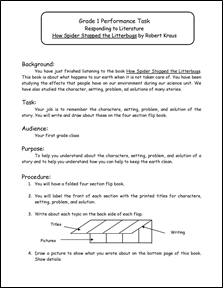
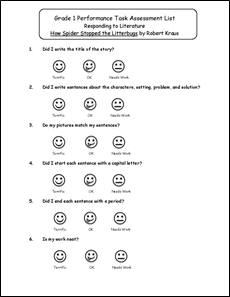
This reproducible form is meant to assess oral and written language that is used during sharing time. Children are expected to write about their sharing and then read it to their classmates before presenting the actual object. This greatly enhances the experience.
These reproducible forms are meant to facilitate the development of research report and book report writing skills. The suggested ideas and activities on the pages below are intended for intermediate students in a library setting or in a regular classroom. Students should already be familiar with standard book reports that include character descriptions, setting, plot, problem, and resolution. These activities should enable them to go beyond the traditional “book report.” Children should be encouraged to browse, scan the shelves and titles, and skim the tables of content before making a selection. Reading and reporting can and should be a pleasurable experience!
These Dewey book reports are not standard, fill-in-the-blank forms, but thought provoking questions and challenges with critical thinking skills in mind. Individual student and teacher interests and talents are allowed for and cooperative grouping is encouraged. Students should be motivated and trained to be thorough in their reporting and to make a nice presentation package. Teachers and/or librarians may choose to assign particular questions for certain students or add additional bonus projects for others. It is suggested that students always include the top portion of each report page for easy identification of the topic.
Flap Books
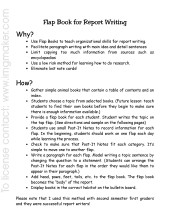
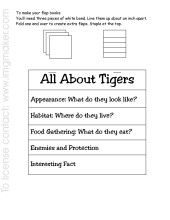
(Please note that all of the flap book patterns and samples need to be saved to your computer and then opened. Not sure why, but that’s the way it works! Maybe it’s the original graphics. Sorry for the inconvenience!) T-Rex Flap Book Sample
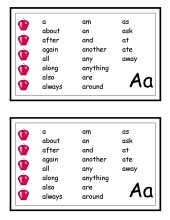
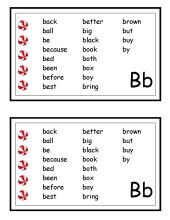
This is a handy little reference book that is meant to support early and emergent readers and writers. It contains Dr. Edward Fry’s first three hundred high frequency words. Each letter of the alphabet has its own page with a colorful graphic that serves as an anchor for the sound. I would suggest laminating the cover and then binding the book at the top.
(sample)
Craft Lessons
The following book lists were outlined in Craft Lessons by Ralph Fletcher.
Grades K-2
Category
Chair For My Mother, A
Using Illustrations to Convey Information
Doorbell Rang, The
The Repeating Line
Fireflies
Beginning, Middle and End
Fireflies In the Night
New Ways to Write About and Old Topic
I’ll Fix Anthony
Use Your Voice When You Write
Important Book, The
Moving Beyond “List” and “Love” Stories
Just Like Daddy
Surprise Endings
Little Nino’s Pizzeria
How to Pace a Story
Medieval Feast
Using Illustrations to Convey Information
My Five Senses
Using Your Voice When You Write
My Little Island
Using Details to Describe the Setting
Officer Buckle and Gloria
Match Words With the Picture
Old Henry
Cause and Effect
Shrek!
Write a Strong Lead
Tar Beach
Describing the Setting
Grades 3-4
Category
All the Small Poems and 14 More
Poetry to Support Writers
Birthday Presents
Memoirs
Chalk Doll
How the Physical Things Hold Stories
Cherries and Cherry Pits
Characters Who Write
Dear Mr. Blueberry
Characters Who Write
Great Frog Race, The
Poetry to Support Writers
Jamaica Louise James
Close Observation of the World
Lemonade Sun
Poetry to Support Writers
Nappy Hair
How the Physical Things Hold Stories
Night on Neighborhood Street
Close Observation of the World
Picnic in October
Memoirs
Sitti’s Street
Memoirs
Sky Tree
Close Observation of the World
Tell Me a Story, Mama
Memoirs
This Quiet Lady
Memoirs
Writers Workshop Folders
Materials: Two 12 x 18 pieces of construction paper, although I prefer using laminated vellum for durability.
Assembly: Fold the sheets of paper as indicated below.
#1 #2
Place the folded paper #1 inside folded paper #2 to form a folder with pockets. In first grade we would call #1 a “hamburger fold” and #2 starts with a “hot dog” fold. Staple the pocket on the bottom right hand side. Here’s what your finished folders should look like:
Labels for pockets
Put the student’s name on the cover and use for special assignments, menu of ideas and recording sheets.
Inside left pocket is for ongoing or incomplete work.
Inside right pocket is for finished or completed work.
Back pocket is the “mailbox” for conferencing once a week. Move some of this work to student portfolios.